
Child Psychology · With Carissa & Josée
Child Psychology in Calgary & Okotoks
Warm, play-based, neurodiversity-affirming support for children — with parents as partners every step of the way. Offered by Carissa Cochrane, CCC, and Josée Kykkanen, Registered Psychologist.
Children don't always have the words for what they're feeling, but they show us through play, behaviour, and connection. Carissa Cochrane, CCC, and Josée Kykkanen, Registered Psychologist, offer warm, affirming support for children up to age 12, working closely with caregivers so progress carries over to home and school.
What child psychology can help with
We support children and their families with a wide range of concerns:
- Big feelings, worries, and emotional regulation
- Behavioural and social challenges
- Anxiety, sadness, or withdrawal
- School-related stress and transitions
- Family changes such as separation, divorce, a move, or a new sibling
- Grief and loss
- Neurodevelopmental differences, including ADHD and autism
- Parenting strategies and connection at home
Signs your child might benefit from support
Every child has hard days. It may be worth reaching out when something has lasted for a few weeks or is getting in the way of everyday life: frequent meltdowns that seem bigger than the situation, worries that stop them from going to school or seeing friends, trouble sleeping, changes in eating, pulling away from things they used to enjoy, or a big change in the family that they're struggling to make sense of. Some signs are easy to miss; our article on child anxiety signs parents miss walks through a few. Trust your instincts. You know your child best.
How we approach child psychology
Children engage best through play, so we use games and activities to help them feel safe and understood. Our approach is attachment-based and neurodiversity-affirming:
- Play-based and relational interventions, including Synergetic Play Therapy and Theraplay-informed practices
- Building emotional regulation and coping skills
- Close collaboration with parents and caregivers
- Strengths-focused, never deficit-focused
We see each child's unique wiring as part of who they are, not something to fix. Care is built around their strengths.
What a play-based session looks like
To a child, a session can look a lot like play: drawing, building, sand tray, games, or stories. To the therapist, play is how children show what's going on inside and practise new ways of coping. A worried child might act out a scary situation with figures and try a braver ending. A child with big feelings might learn to notice the signals in their body and use a calming strategy in the moment. Sessions are paced to your child, and nothing is forced.
Working with parents
Parents are partners in the work. We usually begin with a parent consultation, so we can hear your concerns, your child's history, and what you've already tried before your child comes in. Along the way we check in regularly, share what we're noticing, and give you practical ways to support regulation and connection at home. Small, consistent changes at home often make the biggest difference.
Helping at home between sessions
The skills children learn in session grow fastest when home feels steady and predictable. We often look at simple things together: a calm-down plan your child helps create, visual routines for mornings and bedtime, language that names feelings without judging them, and ways to reconnect after a hard moment. We also make room for you. Parenting a struggling child is tiring, and your own regulation is one of the most powerful tools your child has.
What to expect
We begin by understanding your child and family, then create a plan that builds on your child's strengths. Parents are involved throughout, and we can coordinate with schools when that would help. Progress with children is rarely a straight line. There may be better weeks and harder weeks, especially around transitions, holidays, or the start of a school year, and that is a normal part of the process.
Who it's for
Children up to age 12 who are struggling emotionally, behaviourally, socially, or developmentally, and parents who want a compassionate, affirming, practical approach.
For teens and young adults aged 12 to 25, see youth & young adult mental health.
The process
How child therapy works
Four stages, with parents involved throughout.
Parent consultation
You meet with us first to share your concerns, your child's history, and what you'd like to see change.
Getting to know your child
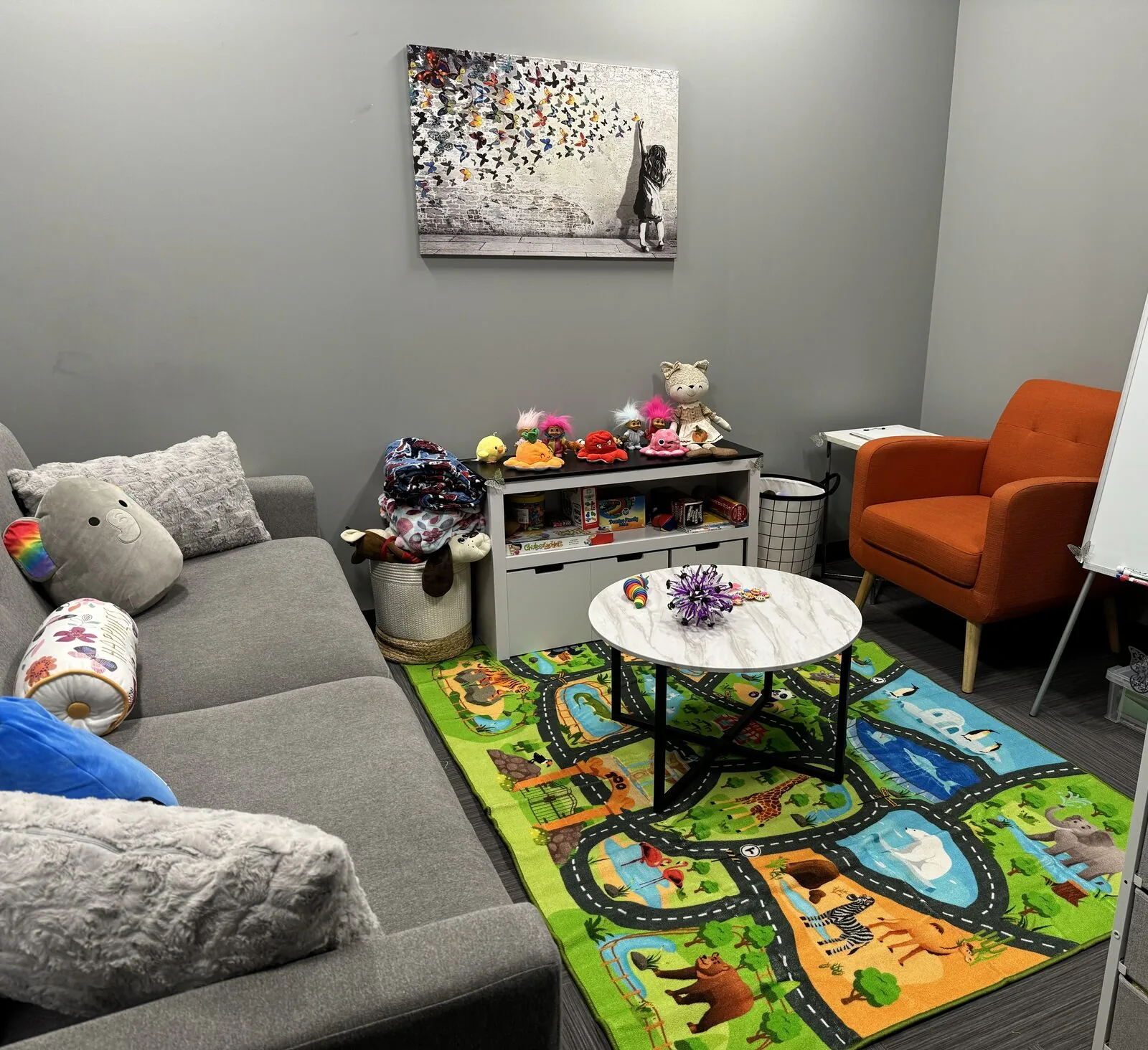
Early sessions are about building trust. Your child gets to know the room, the toys, and their therapist at their own pace.
Play-based sessions and check-ins
Your child works on feelings and coping through play, and we check in with you regularly with practical ideas for home.
Review and next steps
We look back at progress together, plan how to keep the gains going, and space sessions out as things settle.
Where to find this
Available in Calgary & Okotoks
In person at either office, or virtually anywhere in Alberta.
Go deeper
Related reading from our blog
Child Psychology questions